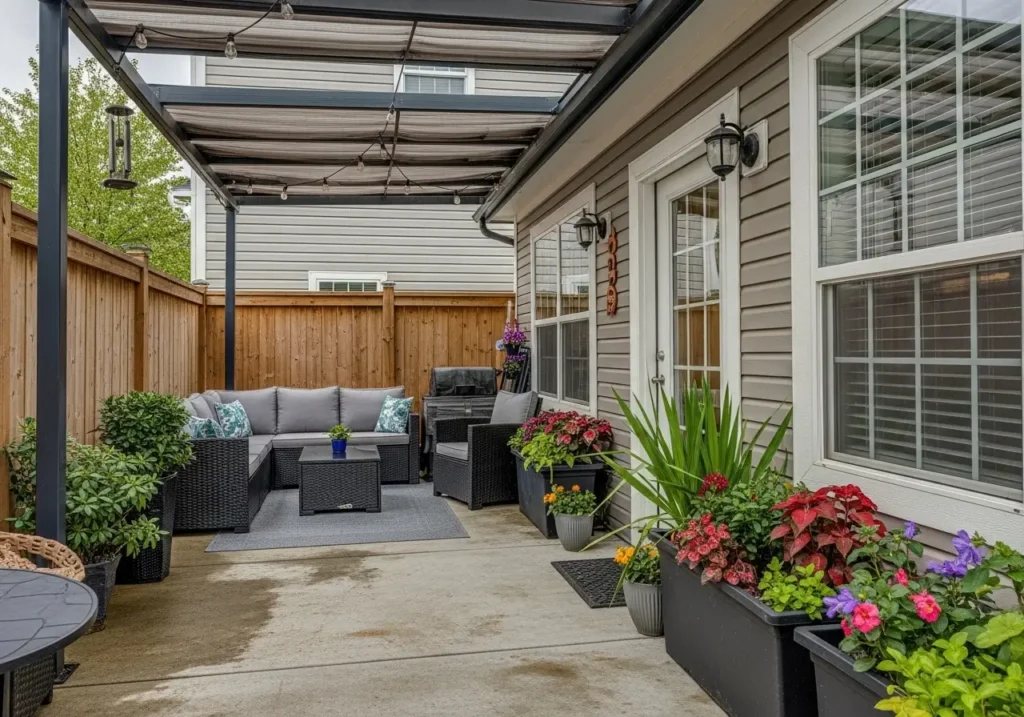
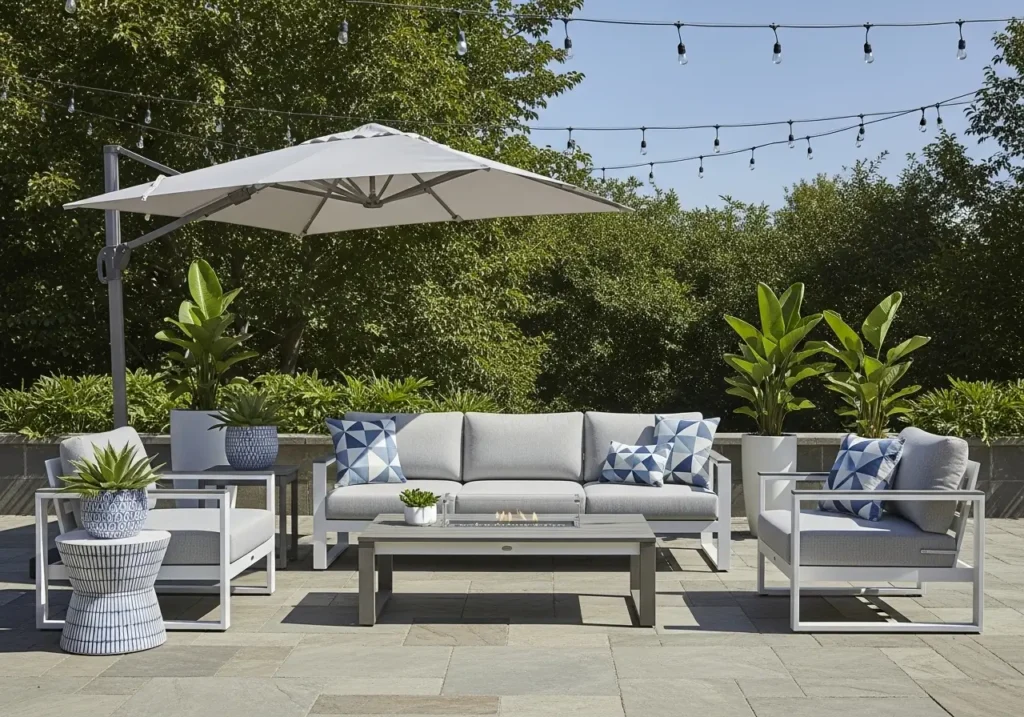
The best Small Balcony Ideas are not about cramming a full patio into a narrow slab of concrete. They are about making sharp choices. A tiny balcony can become a coffee spot, reading corner, herb garden, sunset perch, or even a compact work nook, but only if every item earns its place. The balconies that look charming in photos usually follow one rule: they do less, better.
I have seen small balconies transformed with almost no square footage and very little budget. The successful ones never start with decor. They start with purpose. That sounds simple, but it changes everything. Once you know whether your balcony is mainly for morning coffee, evening lounging, plant growing, privacy, or entertaining one friend, the furniture decisions get easier, the layout gets cleaner, and the space stops feeling like an awkward leftover attached to the apartment.
A small balcony also punishes vague decorating. One oversized chair can swallow the whole floor. Three mismatched planters can make the edge feel chaotic. A cute bistro set can become a daily obstacle if the doors barely clear it. Tiny outdoor spaces are ruthless editors. That is the good news. They force better design.
Start with function before you buy anything
Most people waste space on a balcony because they shop by image instead of by behavior. They buy what looks relaxing, then discover they never use it. A better approach is to ask one blunt question: what will I actually do out here three times a week?
If the honest answer is “drink coffee for fifteen minutes,” your setup should not be trying to imitate a full outdoor lounge. If the answer is “grow herbs and sit outside after dinner,” that leads to a very different layout. When I plan a small balcony, I choose one primary use and one secondary use. More than that usually creates clutter.
The five best balcony roles
Pick one main identity for the space:
Coffee balcony: one chair, one tiny table, maybe one plant.
Reading balcony: comfortable seating, soft lighting, minimal clutter.
Garden balcony: vertical planting, slim seating, practical watering setup.
Dining balcony: folding table, stackable chairs, tight circulation.
Quiet retreat: privacy screen, layered textiles, warm lighting.
Once you pick the role, everything else becomes easier to edit. That is the part many “small balcony ideas” miss. Style works best after function is locked in.
Measure before you dream
A balcony can look roomy in your head and tiny in real life. Measure the length, depth, door swing, railing height, and any awkward corners before ordering a single piece of furniture.
Write down:
Full floor dimensions.
Space needed to open the balcony door.
Width of walkway you want to keep clear.
Railing depth if you plan to hang planters or use a bar shelf.
Sun and wind exposure.
That last point matters more than people expect. A sun-baked balcony needs different materials and plants than a shaded windy one. Pretty ideas fail fast when the real conditions fight them.
Small Balcony Ideas that make the layout feel bigger
The fastest way to ruin a tiny balcony is to fill the middle. The center should feel open whenever possible. On small outdoor spaces, the eye reads open floor as spaciousness, even when the actual dimensions are modest.
I use the perimeter-first rule. Push function to the edges, keep the middle cleaner, and let the balcony breathe.
Use corners as hard as possible
Corners are where small balconies quietly win. A corner chair, corner plant cluster, or angled shelf can open the rest of the space without making it look empty.
Good corner uses:
A compact lounge chair with one cushion.
A tall plant stand with layered pots.
A narrow storage bench.
A folded ladder shelf.
A lantern cluster or basket for blankets.
One smart corner usually does more than three random accessories spread across the floor.
Keep one clean walking line
Even a balcony that is only a few feet deep feels better when movement is obvious. You should be able to step outside without immediately sidestepping a chair leg or brushing a planter.
A strong small-balcony layout usually has:
One clear path from the door.
Seating pushed to one side or the far end.
Furniture scaled below railing height or kept visually light.
Storage tucked under seating or mounted vertically.
When movement is awkward, the balcony gets used less. That is the practical truth behind good design.
Float less, anchor more
On larger patios, floating furniture in the middle can look sophisticated. On small balconies, it often looks accidental. Tiny spaces benefit from anchored furniture: a bench against the wall, a chair in the corner, a table clipped to the railing, shelving mounted vertically.
Anchored pieces do two things:
They preserve floor space.
They make the design feel intentional.
That intentional feel is what makes a small balcony seem curated instead of cramped.
Best furniture for small balconies
Furniture scale matters more than style. You can make several design styles work, but only if the size is right. Oversized outdoor furniture is the fastest route to a balcony that looks expensive and functions terribly.
Folding furniture is usually the smartest choice
Folding furniture wins because it changes with your day. A folding chair can disappear when you want room for plants or fresh air. A fold-down table gives you a place to eat without permanently occupying the balcony.
Best folding pieces:
Slim folding bistro chairs.
Wall-mounted drop-leaf tables.
Foldable side tables.
Stackable stools.
Folding lounge chairs if the balcony is long enough.
This is not the most glamorous category to shop, but it is often the most useful.
Bench seating beats bulky armchairs
A small bench often works better than two chairs because it creates seating without visually chopping up the floor. It also gives you a cleaner line along one wall or railing.
Why benches work so well:
They can hold cushions and storage.
They use width efficiently.
They make the space feel built-in.
They can seat one comfortably or two in a pinch.
If you want a more relaxed balcony, choose one narrow bench with a cushion rather than multiple small seats competing for room.
Rail-mounted and hanging options save floor space
This is where smart small balcony ideas get interesting. If the floor is tight, use the railing.
Good space-saving options:
Rail-mounted bar tables.
Hanging planter boxes.
Clamp-on drink shelves.
Hanging lanterns.
Slim hooks for a watering can or small tools.
A balcony railing is not just a boundary. It is valuable real estate.
Furniture guide by balcony goal
The right furniture combination depends less on trends and more on how you move through the space.
Small Balcony Ideas with plants that do not overwhelm the space
Plants can completely transform a balcony. They soften hard edges, create privacy, cool down the visual feel, and make even a plain concrete corner feel alive. But there is a point where greenery stops looking lush and starts looking like a crowded nursery.
The trick is layering without flooding the floor.
Go vertical before you go wide
This is one of the best decisions you can make on a tiny balcony. Vertical gardens, slim shelves, hanging planters, and tiered stands let you add greenery without sacrificing seating or circulation.
Smart vertical plant ideas:
A ladder shelf with herbs and trailing plants.
Wall-mounted pots.
Hanging macrame planters used sparingly.
A trellis with climbing vines.
Tiered plant stands in one corner.
I say “used sparingly” because too many hanging elements can make a small balcony feel busy overhead. One or two is charming. Seven is a hanging obstacle course.
Mix plant heights, not pot chaos
A beautiful balcony garden usually has variation in plant height but restraint in container style. If every pot is a different color, shape, and scale, the balcony starts feeling visually noisy.
A better formula:
One tall plant.
Two to four medium plants.
A few smaller herb or accent pots.
Pots in a limited material or color palette.
This gives you depth without the cluttered look that small spaces punish.
Best plant types for small balconies
Choose plants based on sun, wind, and your actual care habits.
Strong balcony categories:
Herbs for sunny spaces: basil, mint, rosemary, thyme.
Trailing plants for edges: pothos, ivy, string plants where climate allows.
Compact flowering plants for color.
Tall grasses or slender evergreens for privacy.
Low-maintenance green plants for softer texture.
If you travel often or forget to water, do not design a balcony around needy plants. A simple, durable plant plan will look better longer.
The plant mistake that makes balconies feel smaller
Too many floor pots. That is usually the problem.
When every inch of floor edge is lined with containers, the balcony shrinks visually and physically. Use a few meaningful plant moments instead:
one anchor plant,
one vertical grouping,
one small tabletop plant.
That often looks richer than fifteen scattered pots.
Privacy ideas that still feel airy
A small balcony feels more usable when it feels slightly protected. Privacy matters even if your view is good. People relax more when they do not feel fully exposed to neighbors, windows, or the street below.
The challenge is creating privacy without making the balcony dark or boxed in.
Best privacy screens for a small balcony
The most useful privacy tools are light, vertical, and removable when possible.
Good options:
Outdoor curtains.
Reed or bamboo screening.
Slatted wood panels.
Weather-friendly fabric screens.
Tall narrow planters with grasses.
Trellises with climbing plants.
The best version depends on your building rules and climate. Renters often do better with tied-on screening or freestanding options that do not require major installation.
Use partial privacy, not total enclosure
This is one of the most overlooked small balcony ideas. You do not always need to block everything. Partial privacy often feels better.
For example:
Cover only the railing section facing a neighboring balcony.
Use one side screen and leave the front open.
Place a tall plant only where sightlines are most awkward.
Use sheer outdoor fabric rather than solid opaque panels.
That lighter approach keeps the balcony open and breezy while still feeling more personal.
My favorite privacy trick
Use height at one end, openness at the other. A tall plant or panel near the seating area creates a cozy zone, while the rest of the balcony stays visually open. That balance makes the space feel more expensive and less improvised.
Lighting ideas that make a tiny balcony feel magical
Lighting is where a balcony shifts from storage-adjacent to genuinely inviting. It changes mood fast. It also extends how often you use the space, especially if your balcony mainly gets used in the evening.
You do not need dramatic lighting. You need warm light in the right places.
Best lighting for small balconies
The most effective small-scale options are:
Warm string lights.
Battery lanterns.
Solar lanterns if sun exposure is strong.
Rechargeable table lamps.
Small wall sconces if allowed.
LED candles for a soft evening look.
Warm light is almost always better than cool white on a balcony. Cool light can make the space feel harsher and less intimate.
Layer your light sources
One overhead-style light source can be enough, but layered lighting feels better.
Try combining:
One string light line overhead or along the railing.
One table lantern or floor lantern.
One candle-style accent.
This creates depth. Even on a tiny balcony, layered light makes the space feel designed rather than merely lit.
Avoid the airport-balcony effect
A balcony should not feel like a bright waiting area. Too much direct or overly white lighting kills the mood immediately. Small outdoor spaces benefit from glow, not glare.
Flooring tricks that upgrade the whole balcony
Balcony floors are often the least attractive surface in the whole space. Plain concrete, worn paint, or builder-grade tile can make everything else feel unfinished. Flooring is one of the few upgrades that changes the look instantly.
Best balcony flooring ideas
Depending on your setup and rental rules, good options include:
Interlocking deck tiles.
Outdoor rugs.
Artificial grass used very selectively.
Painted floor treatment if permitted.
Wooden-look balcony tiles.
Outdoor rugs are the fastest style shift. Deck tiles often create the biggest visual upgrade.
Use flooring to define zones
Even a very small balcony can feel more intentional when the floor helps signal purpose.
For example:
A small rug under a chair and table makes a lounge zone.
Deck tiles running lengthwise can make a narrow balcony feel longer.
A mat under plant shelves makes the gardening area feel contained.
That subtle zoning effect makes the balcony look organized instead of random.
One caution on rugs
Choose a rug scaled to the furniture, not the entire balcony by default. A rug that is too large can make a tiny space feel tighter. A properly sized rug supports the seating area without swallowing the floor.
Storage ideas that stop the clutter spiral
A small balcony cannot absorb lazy storage. One bag of soil, two random pots, a broom, and an extra watering can can turn the whole space into outdoor overflow.
Storage has to be intentional and discreet.
Best hidden storage for balconies
Look for pieces that work twice:
Storage bench.
Side table with hidden compartment.
Weatherproof box that doubles as seating.
Slim shelving for gardening supplies.
Wall hooks for tools or lanterns.
Dual-use pieces are the backbone of good small-space design. They reduce the number of objects you need.
Keep only balcony-specific items outside
Do not let the balcony become a holding area for things that belong elsewhere. It sounds obvious, but this is how pretty spaces get lost.
What should stay on a small balcony:
Essential outdoor seating.
Chosen planters.
Lighting.
One or two useful accessories.
Outdoor textiles in rotation.
What should not:
Broken pots.
Seasonal clutter with no plan.
Random delivery boxes.
Unused workout gear.
Half-finished DIY leftovers.
A tiny balcony cannot carry indecision.
Related Post: Renter-Friendly Outdoor Upgrades: Your Guide to a Dream Balcony
Decorating a small balcony without making it busy
Decor is important, but on a balcony it should support comfort rather than scream for attention. The most beautiful tiny balconies usually have a controlled palette, a bit of texture, and just enough personality.
Pick one style direction
Do not mix every outdoor trend at once. Choose a mood and commit lightly.
Good style directions:
Mediterranean: terracotta, olive tones, simple herbs.
Modern minimal: black, white, wood, clean lines.
Cozy boho: layered textiles, lanterns, soft neutrals.
Urban green: lots of plants, simple furniture, muted accessories.
Scandinavian calm: pale wood, soft gray, cream, clean forms.
You do not need to buy a themed set. You just need a visual direction so the choices feel related.
Use textiles carefully
Textiles make a balcony feel lived in fast:
seat cushions,
one throw,
an outdoor rug,
maybe one or two pillows.
That is usually enough.
Too many pillows on a small balcony become maintenance, not comfort. Every item outside needs to justify the weather, storage, and cleaning effort it creates.
The decor rule that saves tiny spaces
Decorate by texture, not volume.
That means:
one woven lantern,
one textured cushion,
one wood surface,
one soft textile,
one leafy plant.
Texture creates richness without crowding the eye. Volume just creates clutter.
Small Balcony Ideas on a budget
A good balcony does not require a major spend. In fact, budget limits often lead to better editing. When you cannot buy five things at once, you tend to choose more carefully.
Best low-cost balcony upgrades
Start here:
Outdoor rug.
Two cushions for existing chairs.
String lights.
A couple of well-chosen planters.
A folding table.
Painted pots in one color family.
These changes can shift the whole mood without demanding a full redesign.
Repurpose indoor pieces cautiously
Some indoor furniture can work short-term on covered balconies, but be realistic. Outdoor exposure ruins delicate materials fast.
Safer repurposing ideas:
Metal stool used as a side table.
Wooden crate treated and used for storage.
Simple indoor-style lanterns brought inside after use.
Ceramic pots that can handle the climate.
Avoid assuming any cute indoor chair will survive outdoors. Regret gets expensive.
Budget strategy that works best
Do the balcony in layers:
Seating.
Surface.
Lighting.
Plants.
Textiles and finishing touches.
That order keeps the space usable from the beginning. Too many people buy accessories first and furniture last. It should be the other way around.
Small Balcony Ideas for renters
Renters need flexibility. The goal is to make the balcony feel personal without creating a project that is expensive to reverse.
Best renter-friendly upgrades
These are usually the safest bets:
Folding furniture.
Interlocking tiles.
Outdoor rugs.
Tie-on privacy screens.
Freestanding plant stands.
Removable lighting solutions.
Rail planters.
Avoid anything that depends on major drilling, permanent adhesives, or structural changes unless your building allows it clearly.
Make temporary feel intentional
Temporary does not have to look temporary. The difference is coordination.
A renter-friendly balcony feels polished when:
furniture matches in tone,
planters repeat a material or color,
lighting is consistent,
and the space has one clear purpose.
Even removable elements can look custom when the palette and scale are disciplined.
Small Balcony Ideas by balcony shape
Not every balcony has the same challenge. Long narrow balconies need different strategies than square ones.
Long narrow balcony
Best moves:
Keep furniture slim.
Run layout along one side.
Use a bench or rail table.
Add vertical plants at the far end.
Use flooring lines to emphasize length.
A narrow balcony feels best when the walking path is obvious and uninterrupted.
Small square balcony
Best moves:
One centered seating arrangement can work.
A compact bistro set may fit better here.
Layer a small rug.
Use corners for plants and lighting.
Keep heights varied but controlled.
Square balconies can feel cozier, but they also clutter faster if every side is used.
Awkward corner balcony
Best moves:
Custom-feeling bench setup.
Corner plant grouping.
One diagonal furniture placement.
Use asymmetry intentionally rather than fighting it.
Awkward shapes often become the most charming once you stop trying to force symmetry.
Real-life balcony formulas that actually work
Sometimes it helps to see the whole setup in one shot.
Formula 1: The five-minute morning balcony
One folding chair.
One rail-mounted coffee shelf.
Two herb pots.
Warm string lights.
One seat cushion.
This is ideal for small apartments where the balcony is narrow but still worth using every day.
Formula 2: The tiny evening retreat
Narrow bench with storage.
Outdoor cushion and one throw.
Slim side table.
Tall privacy plant.
Lantern plus string lights.
Small rug.
This works especially well when you want privacy and soft atmosphere more than dining space.
Formula 3: The mini garden balcony
Ladder shelf.
Rail planters.
One stool or compact chair.
Watering can hidden in bench or basket.
Herbs plus one trailing plant.
This is the best route if gardening matters more than lounging.
Formula 4: The social one-friend balcony
Drop-leaf table.
Two folding chairs.
One shared planter cluster.
One lantern.
Cushions that can be stored quickly.
That setup sounds modest, but it is often all a small balcony needs to feel alive.
Mistakes that make a small balcony harder to use
A lot of balcony frustration comes from avoidable choices.
Common small balcony mistakes
Buying furniture before measuring.
Using too many tiny decor items.
Filling the floor with pots.
Choosing heavy, bulky seating.
Ignoring privacy and then never relaxing outside.
Installing harsh lighting.
Treating the balcony as storage overflow.
Designing for guests instead of daily life.
That last one matters. A balcony should serve the person who lives there most often, not a hypothetical entertaining moment once a month.
My strongest opinion on small balcony design
Here it is: the smallest balconies look best when they are slightly underfurnished.
People get nervous about leaving empty space, but empty space is not wasted on a balcony. It is what lets the air, light, and view do their job. A tiny balcony with one beautiful chair, one table, one plant, and one light source often feels better than a balcony packed with six “useful” pieces that never quite let you breathe.
That is the design move many people resist. They want the balcony to prove something. I would rather it feel good.
The smartest way to finish your small balcony
If you want a tiny outdoor space that you will actually use, do this in order:
Decide the balcony’s main job.
Measure every inch, including door clearance.
Choose small-scale furniture with at least one folding or dual-purpose piece.
Add privacy only where needed.
Use vertical planting before floor-heavy planting.
Bring in warm lighting.
Finish with one rug, one or two textiles, and a restrained color palette.
The best Small Balcony Ideas are the ones that make stepping outside feel easy. Not staged. Not crowded. Not precious. Just easy. If your balcony can hold a morning drink, a quiet evening, a few healthy plants, and one comfortable seat without making you shuffle sideways to use it, you have already won.