Good Dinner Party Hosting has very little to do with perfection and almost everything to do with control. Not stiff, formal control. The useful kind. The kind that makes the room feel relaxed because you already decided where people will set drinks, what time food actually hits the table, and which part of the menu can survive if someone arrives twenty minutes late.
I’ve hosted enough dinners to know that the best ones rarely come from ambitious menus or expensive tableware. They come from smart editing. Fewer dishes. Better pacing. One strong focal point on the table. A room layout that lets people move without apologizing every thirty seconds. The host who looks calm is not magically calm. Usually, that person just removed six avoidable problems before anyone rang the bell.
How to plan Dinner Party Hosting around the room you actually have
The fastest way to make hosting stressful is to plan for the fantasy version of your home. If you have a narrow dining nook, a small apartment kitchen, or one of those layouts where the table and sofa are practically in a relationship, build the evening around that reality. It works better. It also feels more polished, because the night is shaped by the space instead of fighting it.
My rule is simple: the smaller the home, the clearer the plan needs to be. In a large house, people can drift and self-correct. In a compact home, every awkward point becomes louder. That does not mean you need fewer guests by default. It means you need cleaner decisions.
How many guests should you invite?
Most hosts overestimate capacity because they count chairs instead of movement. A room can technically seat eight and still host six much better.
Use this practical guide:
If guests must squeeze past seated people to reach the bathroom or kitchen, reduce the number.
If you cannot set drinks down anywhere except the dining table, reduce the number or create side surfaces.
If you cannot serve the food without asking half the room to stand up, reduce the number or switch service style.
For most homes, these numbers feel realistic:
Small apartment dining area: 4 to 6 guests.
Medium living-dining combo: 6 to 8 guests.
Tight studio or one-bedroom: 2 to 4 guests for seated dinner, more for drinks and grazing.
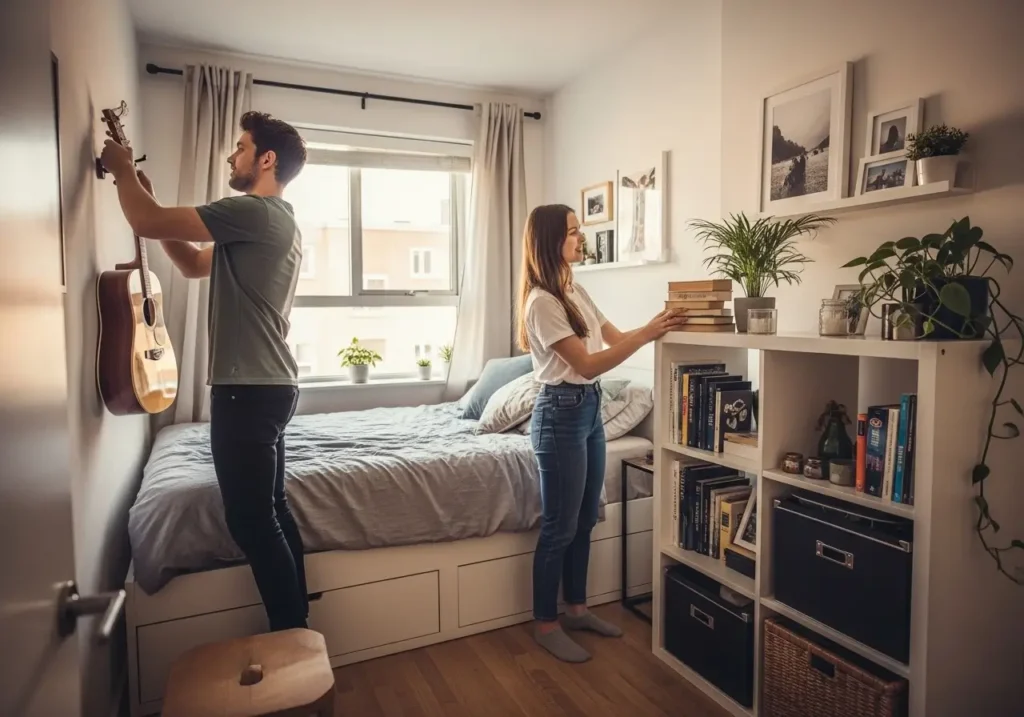
If you are hosting in a smaller apartment, pre-party decluttering matters more than another centerpiece. I’d handle storage first, especially in shared homes, and this guide is genuinely helpful: Couple Storage in One Bedroom Apartments.
What kind of dinner party fits your space best?
Not every dinner needs the same format. Pick the format that fits your room, your cooking style, and your energy.
The smartest choice is usually the one that protects your weakest point. If your table is small, do not choose six serving platters and three side dishes that all need landing space. If your kitchen is tiny, do not choose a last-minute à la minute menu that requires you to pan-finish five components while guests make polite conversation three feet away.
The room should answer three questions instantly
When guests arrive, they should know three things without being told much:
Where to put coats or bags.
Where drinks live.
Where the evening is centered.
That is the real foundation of a calm-feeling night. People relax faster when the room explains itself.
What to cook for a dinner party without trapping yourself in the kitchen
This is where many otherwise smart hosts wreck the night. They cook for applause instead of flow. The food can be good. Very good. But if the host disappears for 45 minutes or serves dinner visibly irritated, the menu was too expensive in the wrong currency.
I always judge a dinner party menu by one standard: how well does it hold up when the timeline slips? Because it will. Someone runs late. Bread browns slower than expected. The wine gets opened and suddenly you are chatting instead of slicing herbs with military precision. A hostable menu survives that.
The best dinner party menus have one “show” element
A strong menu does not need six impressive dishes. It needs one thing people remember and several things that quietly support it.
That usually means:
One main dish with presence.
Two sides that can be prepped early.
A dessert that is finished before guests arrive.
A starter that buys you time, not work.
Examples that work in real homes:
Braised short ribs, mashed potatoes, sharp salad, dessert made ahead.
Roast chicken, herby rice or potatoes, roasted vegetables, tart or pudding.
Lasagna, bitter greens salad, good bread, simple dessert.
Big saffron rice dish or baked pasta, crisp salad, olives, cake.
Stew or tagine, couscous or bread, yogurt-based side, fruit dessert.
This is the part many food-focused hosts resist, but it is true: a dinner party should peak at the table, not in your stress level.
What foods are secretly bad dinner party choices?
Not bad in taste. Bad in hosting behavior.
I avoid these unless the gathering is very specific:
Anything that must be fried at the last second.
Steak for a crowd unless you are extremely practiced.
Delicate fish that overcooks while you talk.
Multiple courses that all need active stove attention.
Pasta dishes that demand minute-perfect finishing for each guest.
Individual plated desserts assembled on the spot.
The problem with these dishes is not ambition. It is fragility. Dinner party food should tolerate human interruption.
Build the menu around temperature forgiveness
This is the most useful hosting principle I know: cook foods that are still good ten minutes later.
You want dishes that are:
delicious warm, not blazing hot,
stable if held briefly,
easy to portion,
and not wrecked by waiting for everyone to sit down.
That one rule improves the whole night. People talk about flavor, but dinner party success is often a temperature-management story disguised as charm.
The starter should calm the room, not fill it
A starter has one real job: create a soft landing.
Good starter options:
Marinated olives and nuts.
A small soup or seasonal salad.
Toasts or crostini already assembled.
One good dip with vegetables and bread.
A cheese plate scaled modestly.
What you do not want is a starter so heavy that the main course arrives to polite disappointment. Guests should feel welcomed, not sedated.
How to set up the table and flow so the night feels generous
People remember food, yes. They also remember whether the room felt easy. Did they have elbow room? Could they hear the person across from them? Was there a place to set a glass while standing? Did the candles look romantic or just make the salad invisible? These details sound small because they are small. That is exactly why they matter.
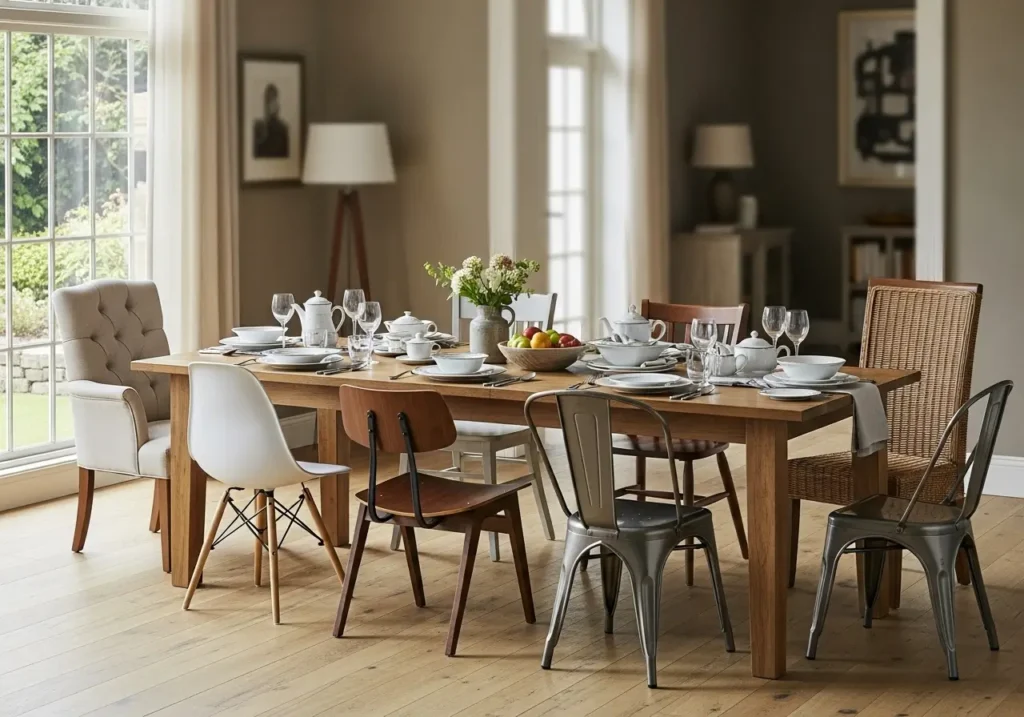
Table styling that feels warm, not overworked
The best dinner tables usually do three things:
Leave room for the food.
Make people feel considered.
Avoid visual clutter.
That means you do not need a crowded centerpiece, layered charger plates, or a theatrical amount of decor. You need:
plates that fit the menu,
glassware that is easy to hold,
napkins that feel intentional,
low lighting,
and one visual anchor.
My preference is always a low centerpiece or a few small ones instead of one tall arrangement. Tall flowers make hosts feel accomplished and guests lean sideways.
The candle problem no one mentions
Candlelight is flattering. Too much candlelight is impractical.
The sweet spot:
enough warm light to soften the room,
enough actual light that people can see what they are eating,
no giant scented candles fighting the menu.
If you love candles, cluster smaller ones. It looks richer and usually works better than one giant centerpiece candle trying to do all the mood work alone.
Seating matters more than etiquette people admit
Who sits where can save or strain the night. I am not talking about rigid place cards unless the dinner is formal. I mean strategic placement.
Useful seating decisions:
Put your most naturally conversational guest near a quieter one.
Separate people who dominate the same kind of story.
Keep anyone with mobility needs in the easiest seat.
Do not trap the shyest person between your loudest friends.
In small dinners, one seat can change the tone of the whole table.
Create one standing zone before dinner
Even for a seated meal, I like one clear pre-dinner area for drinks and first conversation. It can be a corner of the living room, a cleared kitchen counter, or a small drinks station.
That zone matters because it prevents the awkward early shuffle of:
people hovering in the doorway,
guests taking seats too soon,
and you trying to finish setup while everyone watches the stove.
A standing zone buys you transition time. That is a hosting luxury.
The hosting timeline that keeps you from becoming the staff at your own party
Dinner parties feel elegant when time has shape. Not a rigid minute-by-minute military schedule. Just a rhythm. Guests can feel when the night is being held well, and they can also feel when the host is improvising too many fundamentals at once.
A realistic timeline that works
Here is the structure I use most often:
One to three days before
Finalize guest count.
Shop for everything, including ice, lemons, extra napkins, and backup bread.
Prep any dessert.
Prep sauces, dressings, marinades, or braises.
Clear surfaces you want visible during the party.
Morning or early afternoon
Set the table.
Chill drinks.
Prep vegetables and sides.
Portion appetizers.
Clean the bathroom.
Put away visual clutter that steals calm from the room.
One hour before guests arrive
Get fully dressed.
Finish anything messy in the kitchen.
Set out drinks, water, and simple nibbles.
Light candles later than you think.
Put music on before the first knock.
As guests arrive
Offer a drink fast.
Do not start apologizing.
Keep the first ten minutes easy and low-information.
Let the room settle before announcing the plan.
That last point matters. Guests do not need a full verbal spreadsheet the moment they walk in.
The best host phrase in the first five minutes
I use some version of this constantly:
“Drinks are here, make yourself comfortable, dinner’s in good shape.”
It tells people three useful things:
they are welcome,
they can help themselves,
and you are not in crisis.
That is the whole job of the opening line.
Music is not background. It is pacing.
A good playlist can smooth slow moments, warm the room, and make silences feel intentional instead of awkward.
The trick:
start lower-energy than you think,
keep it low enough for full conversation,
and avoid songs that keep hijacking attention unless that is the point of the night.
I want music to create texture, not demand a vote every four minutes.
Drinks, service, and food safety that smart hosts don’t ignore
Hosts often focus so hard on the meal that drinks become either chaotic or overly complicated. The best setup is simple: one welcome option, one easy nonalcoholic option, water always visible, and a plan that does not require you to bartend all night.
Keep the drink setup self-explanatory
A smart drinks station includes:
water glasses already out or easy to spot,
wine opened before guests arrive,
one batch cocktail or one very easy spirit setup,
ice tools in one place,
and a nonalcoholic option that feels deliberate, not apologetic.
Sparkling water with citrus, a pitcher of something herb-forward, or a chilled nonalcoholic aperitif-style option makes the evening feel more complete. Guests notice when the non-drinker gets the same level of thought as everyone else.
Why batch drinks often host better than cocktails
Cocktails made to order sound special. For most dinner parties, they also create a bottleneck and an accidental bartender-host.
Batch drinks work better because they:
speed up arrival,
reduce decision fatigue,
and keep you in the room.
If you love mixing drinks, do one welcome drink and then shift to wine, beer, or simple pours.
Food safety is part of good hosting, not boring hosting
This is the part glamorous hosting articles skip, but smart hosts don’t. Perishable foods should not sit out at room temperature for more than two hours, and that drops to one hour if the room or outdoor setting is above 90°F. Hot foods should be kept hot, cold foods should stay cold, and smaller platters that get refreshed are safer than one giant dish sitting out all night.fda+1
That matters most for:
buffet-style setups,
cheese and charcuterie that include meat,
creamy dips,
seafood starters,
and anything with dairy, eggs, or cooked grains sitting in a warm room.
The practical fix is easy:
put less food out at once,
refresh from the kitchen,
and refrigerate leftovers promptly.
Dessert should lower the pressure, not restart it
Dessert is where the evening should coast a little.
Best dessert categories for hosting:
cakes sliced at the table,
tarts,
puddings,
fruit with cream,
ice cream if your freezer situation allows,
cookies with coffee for a lighter ending.
I prefer desserts that can be served calmly while everyone keeps talking. If dessert requires total silence and precision, it belongs in a restaurant or on a different night.
What separates forgettable hosts from memorable ones
It is not their tableware. It is not the imported olives. It is usually how the guests felt in the first ten minutes and the last twenty.
The host should direct energy, not dominate it
A strong host notices the room and nudges it:
introduces people who should meet,
starts one good topic if the table stalls,
clears one awkward moment without making it bigger,
and knows when to stop “hosting” and simply be in the dinner.
That last skill matters most. Guests do not want a performance of hospitality. They want to feel included in a good evening.
The most underrated dinner party skill
Pacing the transitions.
The night should move through these beats without abruptness:
arrival,
first drink,
first food,
sitting down,
main conversation,
dessert or digestif,
slow ending.
When one phase drags too long, the party sags. When the transitions are too abrupt, it feels managed in a bad way. The right rhythm feels almost invisible.
The unconventional tip I recommend constantly
Do one thing in the room that signals abundance without adding work.
Examples:
a bowl of clementines or figs,
good bread already sliced,
a carafe of water always refilled,
a plate of little chocolates with coffee,
linen napkins even with a simple meal.
That kind of abundance changes the emotional tone of the night. Guests feel looked after before they even name why.
Common dinner party hosting mistakes
These are the ones I see most often:
Inviting more people than the room can emotionally hold.
Cooking too many last-minute dishes.
Leaving no place for people to land with a drink.
Overdecorating the table and underplanning service.
Making drinks too complicated.
Starting late because the host is still plating theatrically.
Apologizing constantly instead of steering calmly.
Treating cleanup as a solo punishment after everyone leaves.
My favorite fix for the last one: set the kitchen up for cleanup before the party starts. Empty dishwasher. Clear sink. Foil or container ready for leftovers. Future you is still a guest worth helping.
A great Dinner Party Hosting strategy is simpler than most people think. Cook one meal you can control. Invite the number of people your room can actually support. Give the evening a shape. Make drinks easy. Let the table breathe. Keep the host visible. And if you want the sharpest rule of all, use this one: no decision should be made at 7:12 p.m. that could have been made at 3:00 p.m.
That is how a dinner feels easy. Not because it was effortless, but because the effort happened early, quietly, and in the right places.