Soundproofing Without Construction is usually less about one miracle product and more about fixing the weak points that noise uses to sneak in, bounce around, and wear you down. I’ve tested the usual renter-friendly tricks in apartments, home offices, echo-heavy rooms, and street-facing spaces, and the pattern is always the same: people spend too much on foam panels too early and not enough attention on gaps, glass, floors, doors, and layout.
That matters because not all noise problems are the same. Traffic noise, upstairs footsteps, hallway chatter, TV bleed, barking dogs, and hollow room echo each need a slightly different response. If you try to solve everything with the same solution, you usually end up with a room that looks “acoustic” but still sounds annoying.
What soundproofing without construction can and cannot do
The first thing to get straight is expectation. Non-permanent sound control can make a room noticeably calmer. It can reduce echo, soften outside noise, dull voice transfer, and make work or sleep easier. What it usually cannot do is create recording-studio isolation in a typical apartment without adding major mass or structural changes.
That sounds limiting, but it is still worth doing. A 20 to 40 percent improvement in the right places often feels much bigger in real life. If your room goes from “I hear every car and every hallway conversation” to “the noise is softer, less sharp, and easier to ignore,” your stress level changes fast.
The three noise problems people confuse
Before buying anything, identify which problem you actually have:
Noise entering the room: traffic, neighbors, hallway voices, barking dogs.
Noise leaving the room: your TV, meetings, music, gaming, calls.
Noise bouncing inside the room: echo, harshness, hollow sound, voice fatigue.
Most spaces have a mix of all three, but usually one is dominant. Start there.
The renter’s advantage
People often think renting means they cannot improve acoustics. That is not true. Renting just forces smarter choices. You focus on movable mass, removable seals, floor treatments, fabric layers, layout changes, and targeted barriers. Done well, that can create a surprisingly quiet room without drills, demolition, or landlord permission battles.
Start with the cheapest fix: find the leaks
If you do nothing else, do this first. Sound loves leaks. A tiny gap under a door, a loose window edge, or an unsealed outlet area can let in more noise than people expect. I’ve seen rooms filled with rugs, curtains, and decorative panels that still sounded bad because the actual leak path was never addressed.
Doors are often the biggest weak point
Interior and apartment entry doors are notorious. Many are lightweight, hollow, and surrounded by tiny gaps that act like open invitations for hallway sound.
What helps most at the door
Add weatherstripping around the frame.
Use a door sweep or draft stopper at the bottom.
Hang a dense curtain over the door if the layout allows it.
Place a heavy rug runner just inside the entry if the floor is hard.
If possible, add a removable mass-loaded door cover or dense quilted panel.
The gap at the bottom matters more than most people think. If light comes through, sound does too.
Why door upgrades work so well
A door has two problems:
It is often lighter than the surrounding wall.
It usually leaks air around the edges.
Fixing both at once gives you one of the best cost-to-impact improvements in the room.
Windows are the second weak point
Street noise, sirens, traffic hum, and general city sound often come through windows first, especially in bedrooms and home offices.
Best renter-friendly window fixes
Use thick, tightly woven blackout curtains.
Hang curtains wider and higher than the window frame.
Add a second curtain layer for more density.
Use removable window-seal tape if drafts and noise come through the edges.
Install removable acrylic or magnetic interior window inserts if your budget allows.
A single decorative curtain helps with light. A dense, properly mounted curtain helps with sound. Those are not the same product, even when marketed the same way.
The unconventional trick that works better than expected
Mount the curtain so it covers extra wall around the window, not just the glass. Sound sneaks around the edges. A curtain barely matching the frame width looks neat and performs worse. A curtain that overlaps generously does more.
Soundproofing Without Construction works best when you add soft mass, not just “acoustic decor”
This is where a lot of online advice goes sideways. People buy thin hexagon foam tiles because they look technical. Most of those products help mainly with echo and reflected highs, not meaningful outside noise reduction. For blocking sound, mass matters. For taming echo, absorption matters. Good rooms usually need both.
Use heavier materials than you think
In real spaces, these tend to help:
Dense curtains
Thick rugs with pads
Full bookcases
Upholstered furniture
Dense wall hangings
Quilted moving blankets
Fabric-covered acoustic panels with actual thickness
Thin felt decor might soften the room slightly. It will not do the same job as heavier layered materials.
The best first purchases by noise problem
Rugs and pads do more than most people realize
If your floor is hardwood, laminate, tile, or polished concrete, the room is probably amplifying itself. Even when outside noise is the main complaint, internal harshness makes the whole space feel louder.
Why rugs matter acoustically
A good rug:
absorbs some reflected sound,
reduces footstep sharpness,
softens voice harshness,
and makes the room feel less hollow.
But the pad matters too. A rug without a proper pad helps less. A dense pad adds another layer of impact reduction and absorption.
Best setup for real improvement
Choose the largest rug your room can handle.
Use a dense pad underneath, not the thinnest anti-slip option.
Cover major walking and speaking zones.
If possible, add a runner in hallways or by entry points.
The difference between “small decorative rug” and “large rug with pad” is not subtle in echo-prone rooms.
If you live below someone
A ceiling problem is hard to solve from below without construction, but you can still reduce the feeling of chaos by softening your own room. Thick rugs, upholstered furniture, and wall absorption do not stop upstairs impact noise entirely, but they reduce the overall harshness of the room enough that the noise feels less invasive.
Curtains are one of the easiest acoustic upgrades
Curtains are underrated because people think of them as visual decor first. Acoustically, they are one of the simplest ways to add broad-area softness to a room.
What kind of curtains actually help
Look for:
thick, tightly woven fabric,
pleated fullness rather than flat panels,
floor-to-ceiling coverage,
and wider-than-window installation.
Velvet, lined blackout curtains, and dense layered drapes usually outperform thin cotton or linen panels for noise control.
Where to use them beyond windows
This is where people leave improvement on the table. Curtains can help on:
glass doors,
entry walls shared with noisy hallways,
open shelving that reflects sound,
and even as flexible room dividers in studios.
If you are working with a small apartment, curtains can do double duty: privacy, softness, and noise control. That is especially useful in compact layouts. If you are reworking a studio or tight living room at the same time, The Guide to Finding the Best Couches for Small Spaces pairs well with this because furniture scale and acoustic comfort are more connected than most people realize.
Furniture placement can reduce noise more than buying gadgets
I have seen people spend money on acoustic accessories while leaving the loudest wall completely bare. Layout matters. Where you place furniture changes how sound reflects, where it concentrates, and how much reaches your ears directly.
Use big furniture on problem walls
If you share a wall with a noisy neighbor, put your heaviest furniture there if practical:
bookcase,
filled wardrobe,
media unit,
upholstered headboard,
storage cabinet,
or large fabric sofa.
That adds mass and creates a buffer zone. It will not fully block deep bass or impact noise, but it often softens speech and midrange transfer enough to matter.
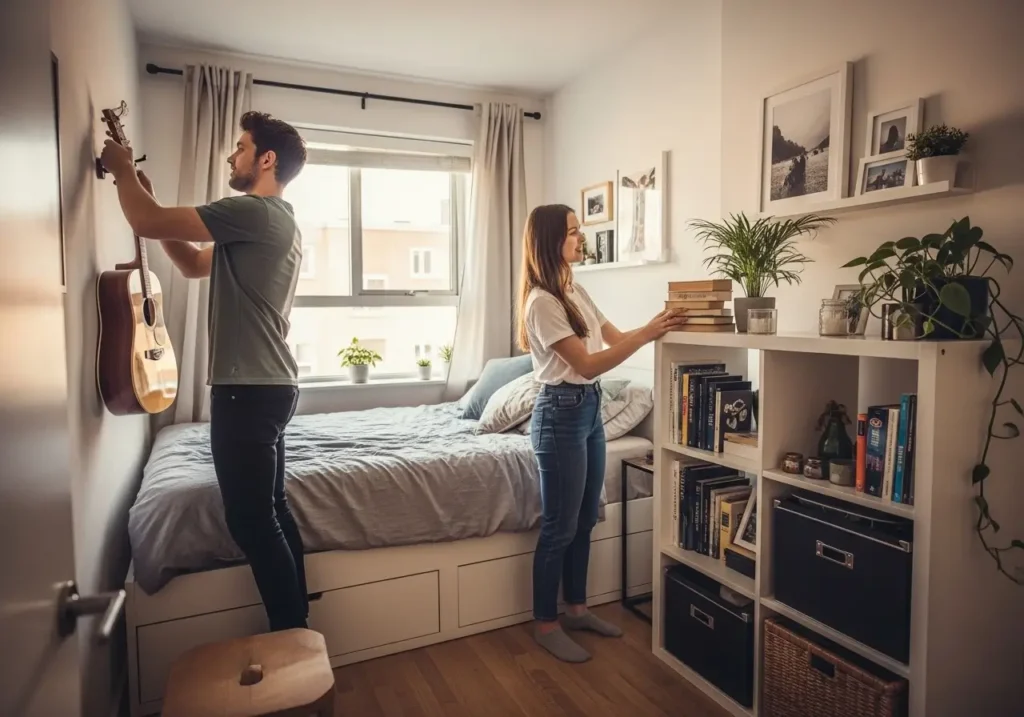
Bookcases are especially effective
A full bookcase works better than an empty shelving unit because it creates irregular depth and real mass. Books, baskets, bins, and decor break up reflections and add density.
Best use:
Place it on the shared wall.
Fill it unevenly but fully enough to create substance.
Avoid leaving huge empty echo pockets.
A bookcase is one of my favorite quiet-room upgrades because it looks normal, works hard, and does not scream “sound treatment.”
Keep your listening or working position away from the problem surface
If your desk is right against the window facing traffic, or your bed is right against the party wall, you are sitting at the point of highest perceived annoyance.
Small moves help:
Pull the desk a foot or two away from the window wall.
Move the bed to an interior wall if possible.
Angle your chair away from the noisiest direction.
Use a bookshelf or divider behind your work zone.
The room may not be quieter in a technical sense, but your experience of it often improves immediately.
Wall treatments that do not require remodeling
Wall treatment is where many people either overspend or choose the wrong material. Not every wall needs treatment. Start with the surfaces that reflect the most sound or share the most sound.
Fabric-covered acoustic panels are better than decorative foam for most homes
If the issue is echo, harsh voice sound, or a bright office, real acoustic panels can help a lot. Look for panels with useful thickness and density, not just thin decorative shapes.
Best places to put them:
behind your desk,
behind your TV or speakers,
on the wall opposite a window,
behind the headboard,
or on a shared wall where voices come through most clearly.
Panels for renters
Good renter-friendly options include:
freestanding acoustic panels,
removable-mount fabric panels,
leaning panels placed behind furniture,
or decorative panels mounted with approved strips if weight allows.
What foam panels are actually good for
Thin foam can help reduce flutter echo and sharpness inside the room. It is not useless. It is just often oversold. If your problem is mostly reverberation during calls, podcasts, gaming, or music practice, some foam may help. If your problem is traffic and neighbors, foam is not where I would start.
Quilted blankets and moving blankets: ugly, effective, worth knowing
This is not the glamorous answer, but it is one of the most practical. Heavy moving blankets or quilted sound blankets can work surprisingly well as temporary sound barriers.
Use them:
over a door,
over a noisy window at night,
behind a desk,
on a shared wall during focused work,
or as a removable panel behind a bed.
They are not pretty on their own, but they are effective because they combine thickness, density, and fabric absorption. If you need proof before investing in nicer treatments, start here. A temporary blanket test can tell you whether that surface is really the problem.
Ceilings, floors, and impact noise: what you can do without construction
Impact noise is the hardest category to solve without building changes. Footsteps from above, heavy chair movement, and dropped objects are low-frequency and structural. You cannot fully beat them with decor. But you can reduce the overall agitation they create.
For upstairs footsteps coming down
Your best no-construction response is indirect:
add soft materials in your room,
use white noise or low-level masking,
reduce room echo,
and move sensitive zones away from the noisiest area if possible.
This does not “stop” footsteps. It lowers contrast and helps your brain notice them less aggressively.
For your own footsteps going down
If you want to be a good neighbor or reduce complaints:
use rugs with dense pads,
add felt pads under furniture,
avoid dragging chairs,
wear soft indoor slippers,
and place runners in frequent walking paths.
These are simple changes, but they make a real difference in apartments.
White noise and sound masking: not the same as soundproofing, still useful
I separate masking from soundproofing, but I still recommend it. When blocking sound fully is not possible, masking can make a room feel calmer by smoothing out sharp contrast.
Best uses for sound masking
Sleeping near traffic or intermittent voices
Working in a noisy apartment building
Covering hallway chatter
Reducing awareness of low-level neighbor noise
A fan, white-noise machine, brown noise, or soft ambient sound can all help. The key is consistency. You want a steady, non-distracting layer that makes intrusive sound less distinct.
Brown noise vs white noise
In practice:
White noise feels brighter and hiss-like.
Brown noise feels deeper and softer.
Pink noise sits somewhere in the middle.
Many people prefer brown or pink noise for sleep and work because they feel less sharp over time.
Room-by-room strategy that works in real homes
Different rooms need different priorities. This is where soundproofing without construction becomes much easier to plan.
Bedroom
Focus on:
window sealing,
dense curtains,
door sweep,
rug and pad,
upholstered headboard or fabric above the bed,
white noise for sleep.
If street noise is your main problem, start at the window. If hallway chatter wakes you, start at the door.
Home office
Focus on:
echo reduction,
desk position,
rug,
wall panels or bookcase behind or beside you,
heavy curtain on glass,
sealing the door if calls are disrupted.
A home office does not need to be silent. It needs controlled sound. There is a difference.
Living room
Focus on:
large rug,
upholstered seating,
media wall treatment if TV sound feels harsh,
curtains,
bookshelves,
furniture on shared walls.
Living rooms often suffer from both echo and sound leakage. That is why soft furnishings do so much here.
Studio apartment
Focus on:
zoning with curtains or bookcases,
large rug,
multi-use upholstered furniture,
window treatment,
door sealing,
and reducing hard-surface overload.
Studios amplify everything because there are fewer barriers. The best fix is layered softness plus smart layout.
The most common mistakes people make
These show up constantly.
Mistake 1: Buying foam first
Foam looks like soundproofing. It is often not the right first move. Start with leak control, mass, rugs, curtains, and layout.
Mistake 2: Treating all noise as one problem
Speech leakage, traffic rumble, footsteps, and echo are not the same. Diagnose first.
Mistake 3: Using tiny soft items and expecting big results
One small rug, two throw pillows, and sheer curtains are not an acoustic strategy.
Mistake 4: Ignoring the door
People obsess over walls and forget the obvious hole. Doors are frequently the cheapest high-impact fix.
Mistake 5: Leaving hard surfaces dominant
If the room is mostly glass, bare floor, blank walls, and minimal furniture, it will sound louder than it has to.
Mistake 6: Overlooking placement
You do not always need more products. Sometimes moving the desk, bed, or couch away from the noise path is the smarter fix.
A realistic budget plan
You do not need to do everything at once. I usually recommend a staged approach.
Low budget
Start with:
door sweep,
weatherstripping,
thick rug with decent pad,
heavy curtains if windows are a problem,
white noise machine or fan.
This solves the most obvious weaknesses first.
Mid budget
Add:
better curtains or second layer,
acoustic panels or quilted blanket treatment,
bookcase on the problem wall,
felt pads and soft furnishings,
removable window insert if traffic noise is severe.
Higher budget without remodeling
Add:
interior acrylic window inserts,
multiple fabric panels,
dense movable sound blankets in hidden locations,
upgraded furniture placement with real mass,
freestanding acoustic screens.
This level can create a dramatic improvement in bedrooms and offices without touching the structure.
My best “do this first” sequence
If you want a calm room fast, follow this order:
Identify whether the main problem is entry noise, echo, or leakage.
Seal the door and window gaps.
Add a large rug with a dense pad.
Install dense curtains properly.
Put mass on the noisy wall, usually a full bookcase or upholstered furniture.
Add targeted wall absorption where voices bounce.
Use masking if the last bit of noise still grabs your attention.
That order works because it handles leaks first, then reflections, then comfort.
The one perspective most people miss
Here is the part that adds the biggest real-world value: quiet is often about reducing contrast, not eliminating sound completely.
People chase total silence, do not achieve it, and assume the effort failed. But many rooms become vastly more livable once noise is:
softer,
less sharp,
less echoey,
less direct,
and less unpredictable.
That is the win. If the room no longer feels acoustically hostile, your body relaxes. Calls get easier. Sleep improves. Concentration comes back. The room stops fighting you.
Final verdict: the smartest version of soundproofing without construction
The best Soundproofing Without Construction plan is not a shopping spree full of acoustic-looking products. It is a layered fix built around the real leak points and the real sound behavior of the room. Seal the gaps first. Add dense curtains and a large rug with a proper pad. Put bookcases or upholstered mass on the problem walls. Use real absorption where echo is the issue. Bring in masking only after the room is physically calmer.
If I had to give one definitive recommendation, it would be this: start with the door, the window, and the floor before you buy wall decor. Those three surfaces usually decide whether a room feels noisy or controlled. Once they are handled, everything else works better.